LES REPLIS
121.5 x 71.5 cm, photography, herbs, varnish, 2001
"Sometimes the veins are the folds of matter that surround the living caught in the mass, so that the marble tile is like a swaying lake full of fishes. Sometimes the veins are the innate ideas in the soul, like the folded figures or the powerful statues taken from the marble block." - excerpt from Le Pli by Gilles Deleuze
121.5 x 71.5 cm, photography, herbs, varnish, 2001
"Sometimes the veins are the folds of matter that surround the living caught in the mass, so that the marble tile is like a swaying lake full of fishes. Sometimes the veins are the innate ideas in the soul, like the folded figures or the powerful statues taken from the marble block." - excerpt from Le Pli by Gilles Deleuze

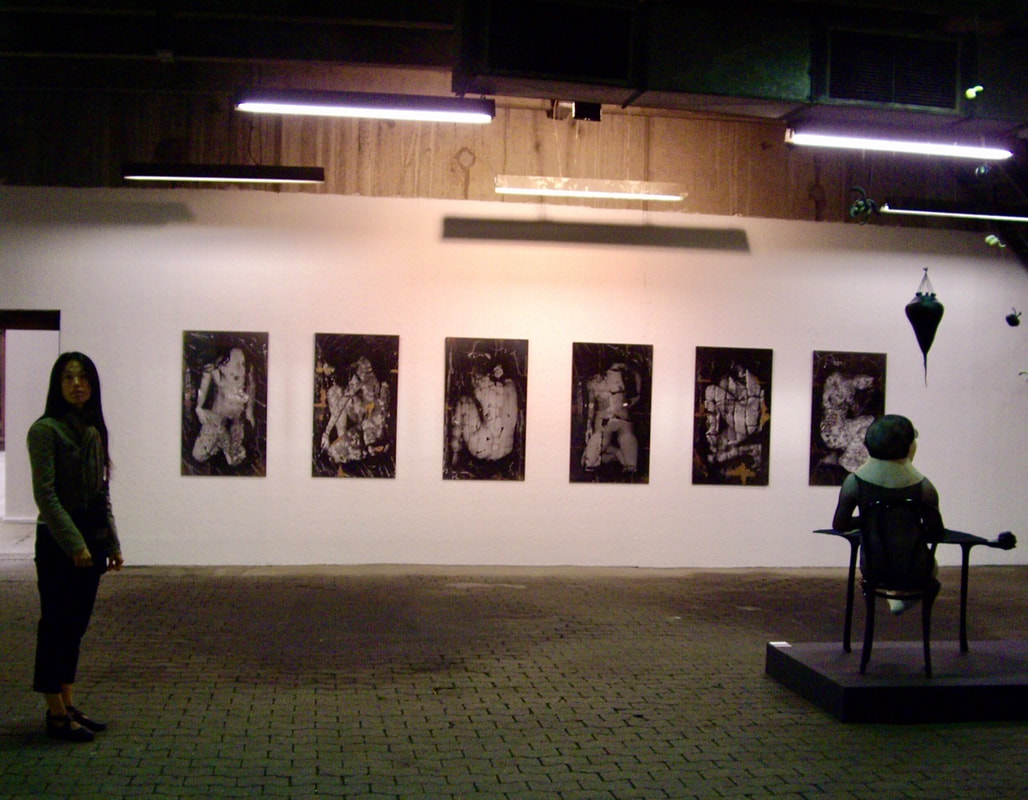
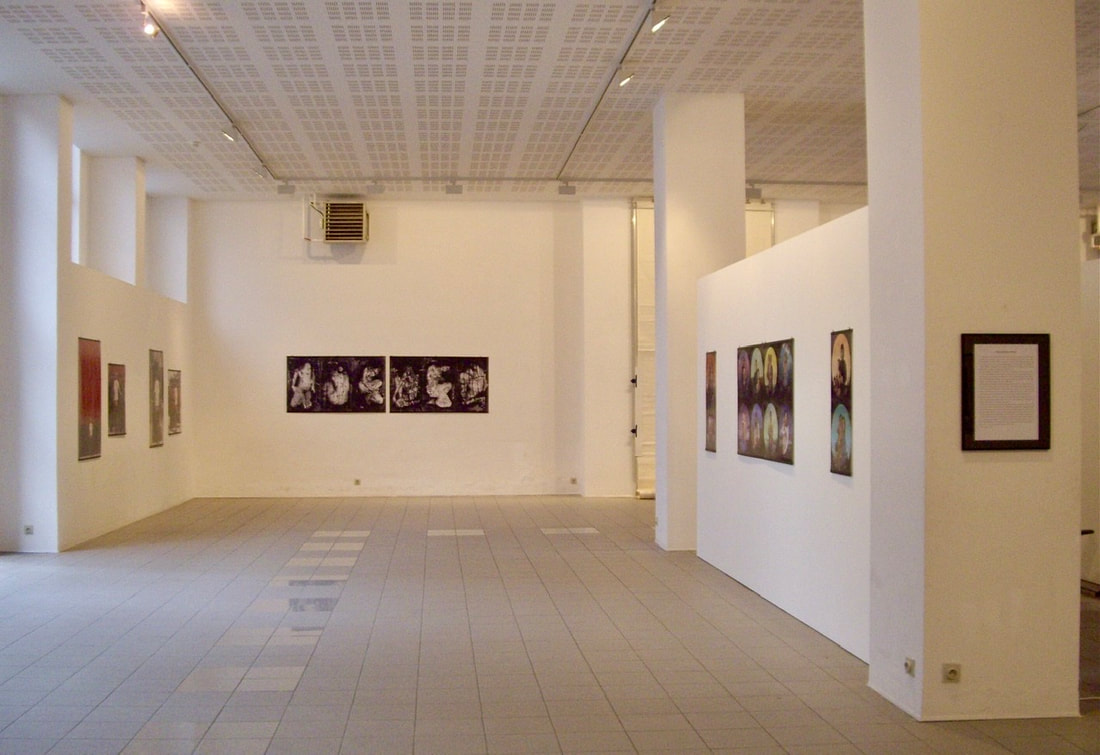
Times Art Museum, Beijing, China, 2011 / Nord Art, Büdelsdorf, Germany, 2010 / Sint Niklaas Fine Arts Academy, Belgium, 2011
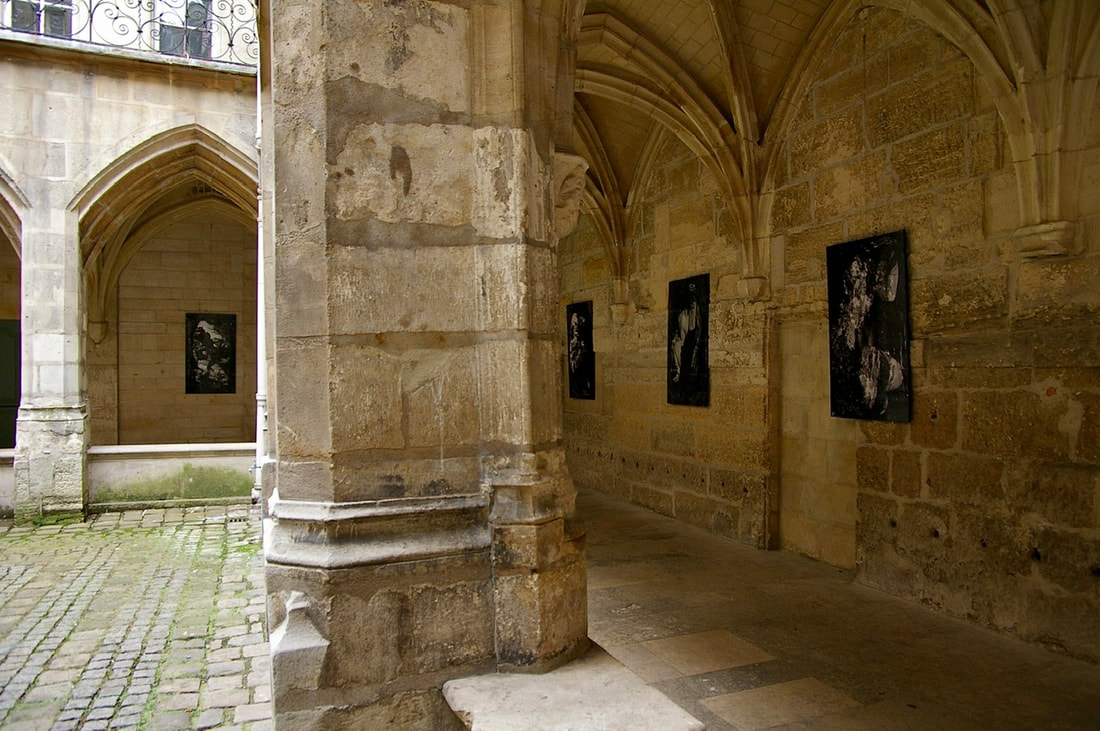
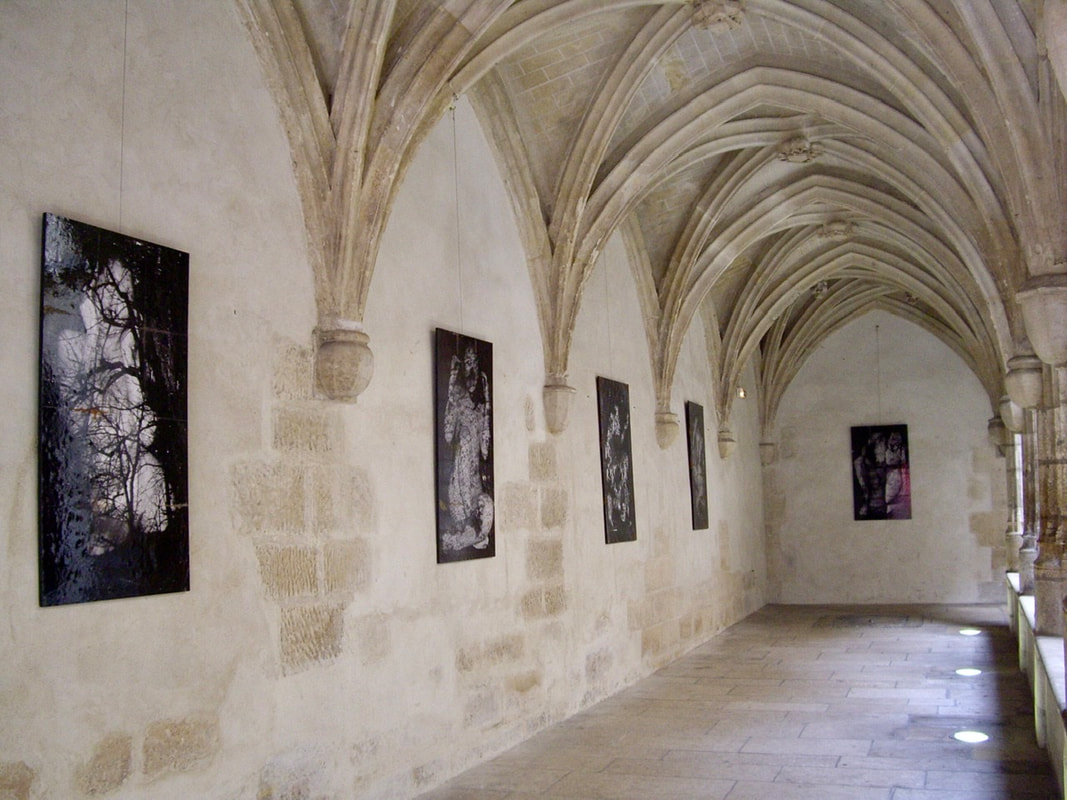
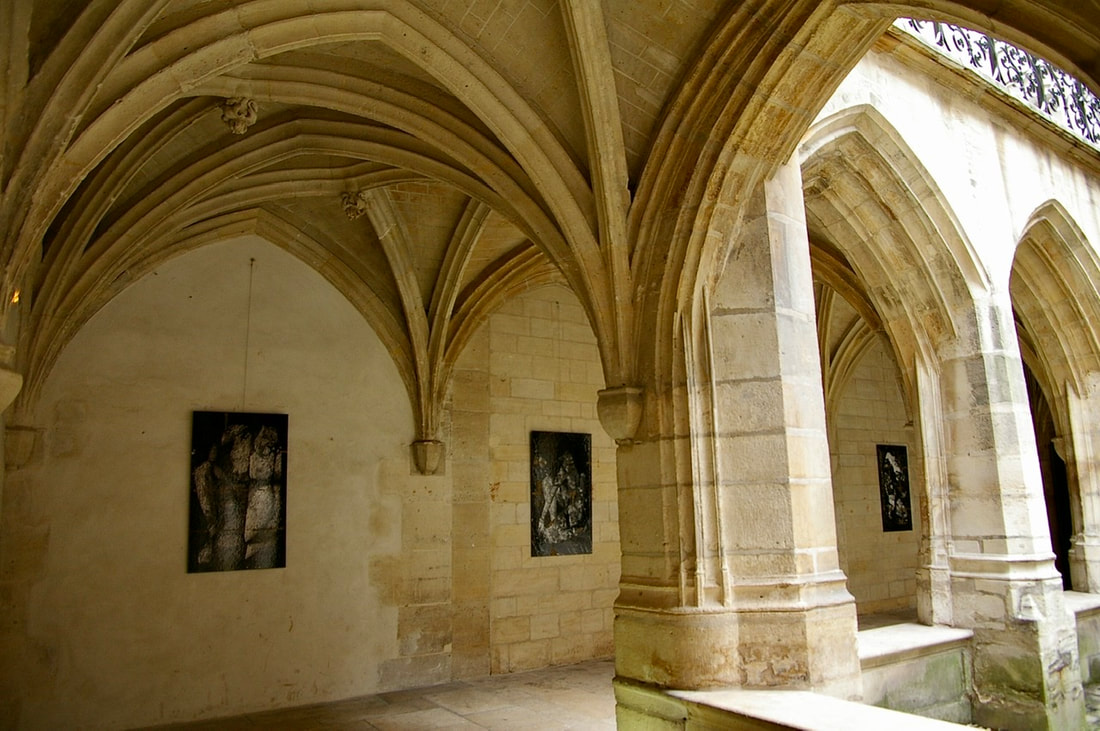
Solo Exhibition at Cloître des Billettes, Paris, France, 2008
Jean-Louis POITEVIN
LA NUIT PROMETTEUSE
Chen Mei-Tsen, Cloître des Billettes, Paris, du 2 au 15 avril 2008
www.lacritique.org/article-la-nuit-prometteuse
Chen Mei-Tsen a réalisé, vers 2001, un ensemble de vingt images qui, par la radicalité de leur propos, nous entraînent dans une zone qui existe en chacun de nous mais vers laquelle, le plus souvent, nous hésitons à voyager. Car cette zone est sombre, très sombre et pourtant pleine de promesses. Elle confine à la nuit, la grande nuit qui précède tous les commencements et évoque l'autre grande nuit, celle qui nous attend après la mort. En décidant de plonger son corps dans une malle noire remplie d'eau, en projetant sur cette double surface des éléments minéraux et végétaux divers, en photographiant ce monde primitif et en exposant à la verticale les photographies qui en résultent, elle accomplit un geste étrange qui nous permet de partager avec elle une expérience abyssale.
Il y a dans le travail de Chen Mei-Tsen une ligne directrice tout à fait singulière qui lui fait appréhender les commencements et la fin comme des états du corps à peu près semblables. Et en effet, face à ces images dressées comme des stèles sombres et brillantes à la fois, nous ne pouvons ignorer que ce que nous voyons est un corps, un corps plié comme furent longtemps pliés les cadavres dans les tombes. Ce corps semble s'enfoncer dans la nuit et s'absenter pour toujours. Couvert de traces, griffures du temps lui-même, et peuplé de reflets énigmatiques, pierres de temples ou veines puissantes de la vie qui trame sa renaissance dans les entrailles de la terre, ce corps féminin fait remonter pour nous des profondeurs de la nuit des temps le souvenir impossible de ce que nous sommes avant que nous ne commencions réellement à exister, avant que nous ne venions au monde.
Car entre la mort et la vie, Chen Mei-Tsen le sait et l'expérimente devant nous, il existe un univers impensable qui relie les signes de la fin aux promesses des commencements. Ce monde est composé de plis qui dessinent la carte du pays oublié, celui de l'attente, celui du suspens, ce monde qui n'existe pas et d'où pourtant nous venons et vers lequel, inévitablement nous allons. Cette carte est celle de la mémoire brûlée, du souvenir sans nom de ce moment où la fin redevient origine, ou le temps se replie sur lui-même pour s'engendrer à nouveau. Ce que nous donnent à voir ces photographies de Chen Mei-Tsen, c'est la manière dont ces souvenirs impossibles hantent inlassablement notre esprit sous la forme de rêves, d'images, de visions.
Ainsi, ce corps absent à lui-même, plongé dans l'eau de l'attente et de l'oubli, est en train de rêver, et ce que nous voyons affleurer à la surface de chacune de ces images, sont quelques-unes des strates complexes qui composent ces rêves. L'eau qui l'entoure est la forme souterraine du souffle et les reflets de pierre, de mousses, de trames végétales témoignent, eux, de ses devenirs possibles. Ainsi ce que Chen Mei-Tsen nous montre, c'est le secret de la transmutation, ce temps indécidable où le rêve, c'est-à-dire la matière - car qu'est d'autre la matière sinon la forme dans laquelle s'incarnent les rêves du vivant ? - nourrit la chair, irrigue le corps. C'est aussi de la source de toute pensée magique comme de tout enchaînement logique que ces images rendent compte.
Si ce corps plié jusqu'à l'offrande nous est offert comme une stèle, c'est qu'il n'est pas seulement mélange de matières. En effet, il recèle aussi en lui toute la puissance du signe et du symbole. Chacune de ces postures exhibe ce corps comme une lettre qui nous dirait, hors toute grammaire, que le sens même de la vie se trouve dans ce moment où le devenir souffle de l'eau passe traverse l'opacité de la peau pour devenir chair vivante. Cette opération seule la puissance magique des images permet de la faire exister aujourd'hui et seul un corps plongé dans le liquide absolu des commencements peut faire à la fois l'expérience de se vivre matière et symbole. Et c'est bien cette double magie, celle qui relève de la puissance du symbole et celle qui appartient à la vie même que ces images de Chen Mei-Tsen rendent pour nous effectives et sensibles.