BIO
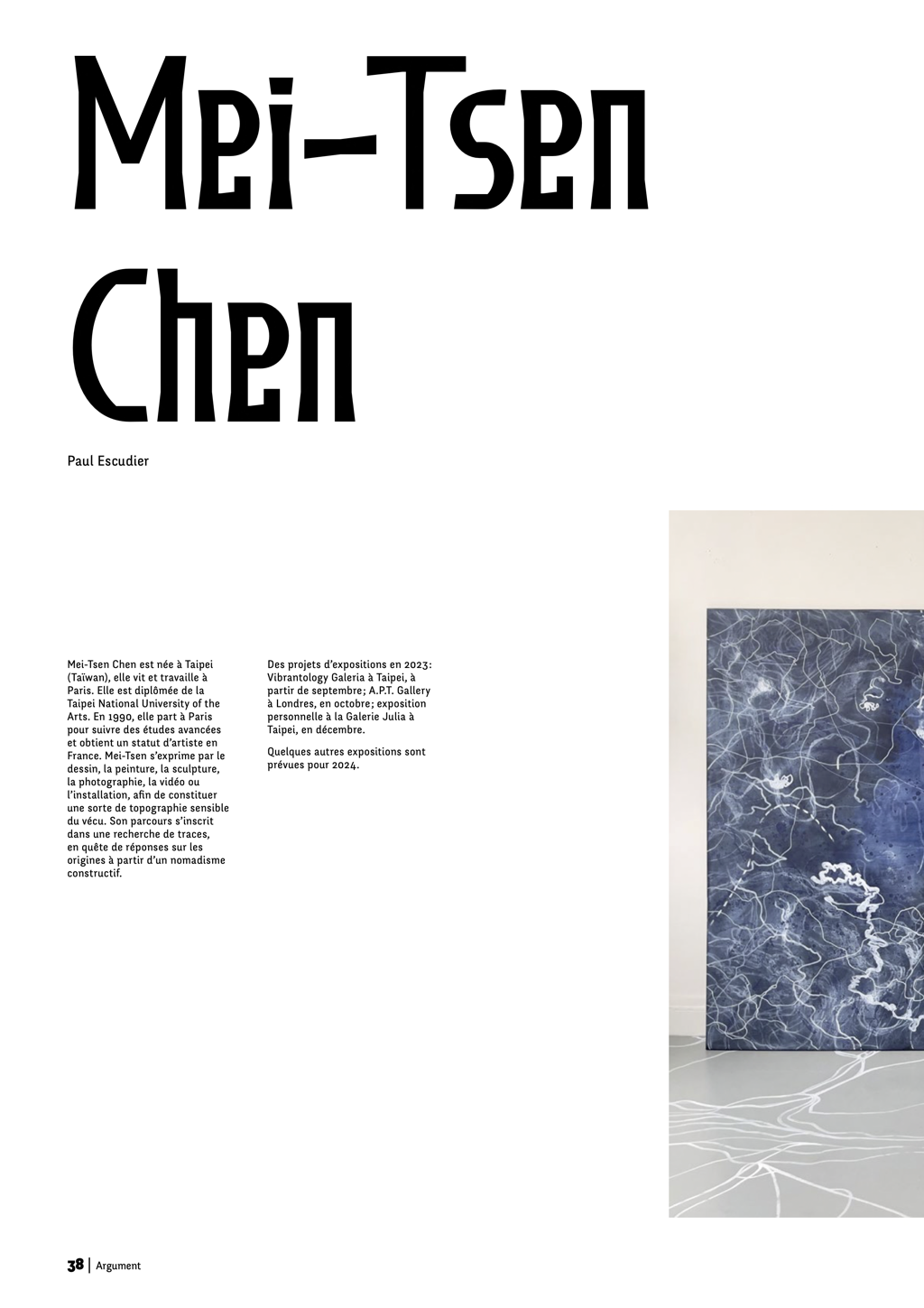
CHEN Mei-Tsen (b. 1966, Taipei, Taiwan) is a Paris-based visual artist who has lived and worked in France for over three decades. A graduate of Taipei National University of the Arts, her multidisciplinary practice spans painting, drawing, photography, video, installation, and sculpture.
Exploring themes of identity, memory, displacement, and belonging, Mei-Tsen transforms personal experiences into evolving cartographies that connect place, movement, and lived experience. Influenced by her architectural heritage, she views the city as a living organism and investigates the ways urban environments shape individual and collective identities.
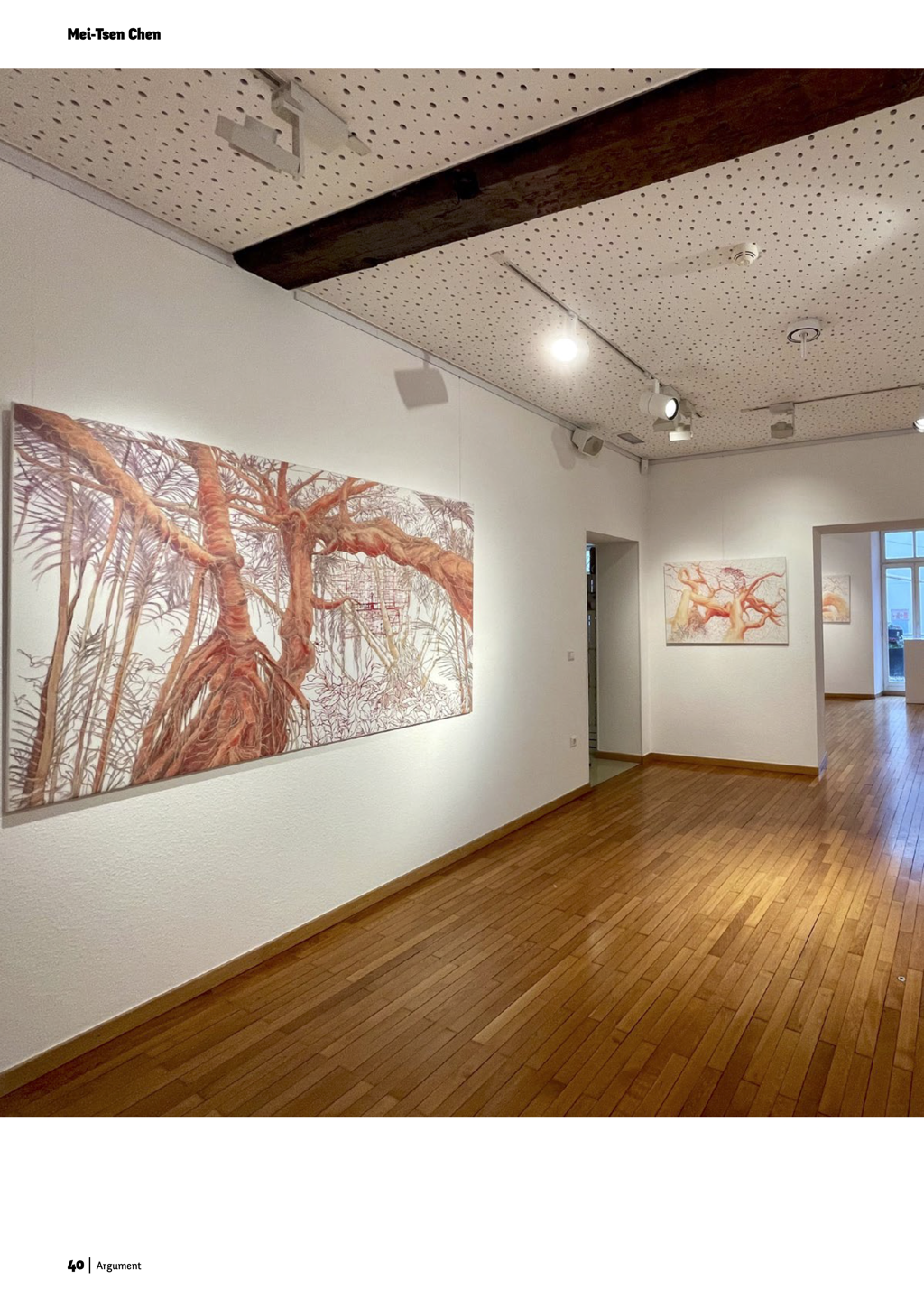
Her work has been exhibited internationally across Europe, Asia, and the United States. In 2024, she received the European Cultural Centre Award (Painting & Mixed Media) at the Personal Structures Art Biennial in Venice. Her work is held in the collection of the Art Museum of China Medical University, Taichung, Taiwan, a landmark building designed by Frank Gehry and scheduled to open in 2028.
Exploring themes of identity, memory, displacement, and belonging, Mei-Tsen transforms personal experiences into evolving cartographies that connect place, movement, and lived experience. Influenced by her architectural heritage, she views the city as a living organism and investigates the ways urban environments shape individual and collective identities.
Her work has been exhibited internationally across Europe, Asia, and the United States. In 2024, she received the European Cultural Centre Award (Painting & Mixed Media) at the Personal Structures Art Biennial in Venice. Her work is held in the collection of the Art Museum of China Medical University, Taichung, Taiwan, a landmark building designed by Frank Gehry and scheduled to open in 2028.
NEWS
Personal Structures - Venice Art Biennial Catalogue
European Cultural Centre Italy
9 May - 22 November, 2026
In Flux: Where Lines Becomes Currents
Jenny LEE
curator and Taiwan representative for Art Basel
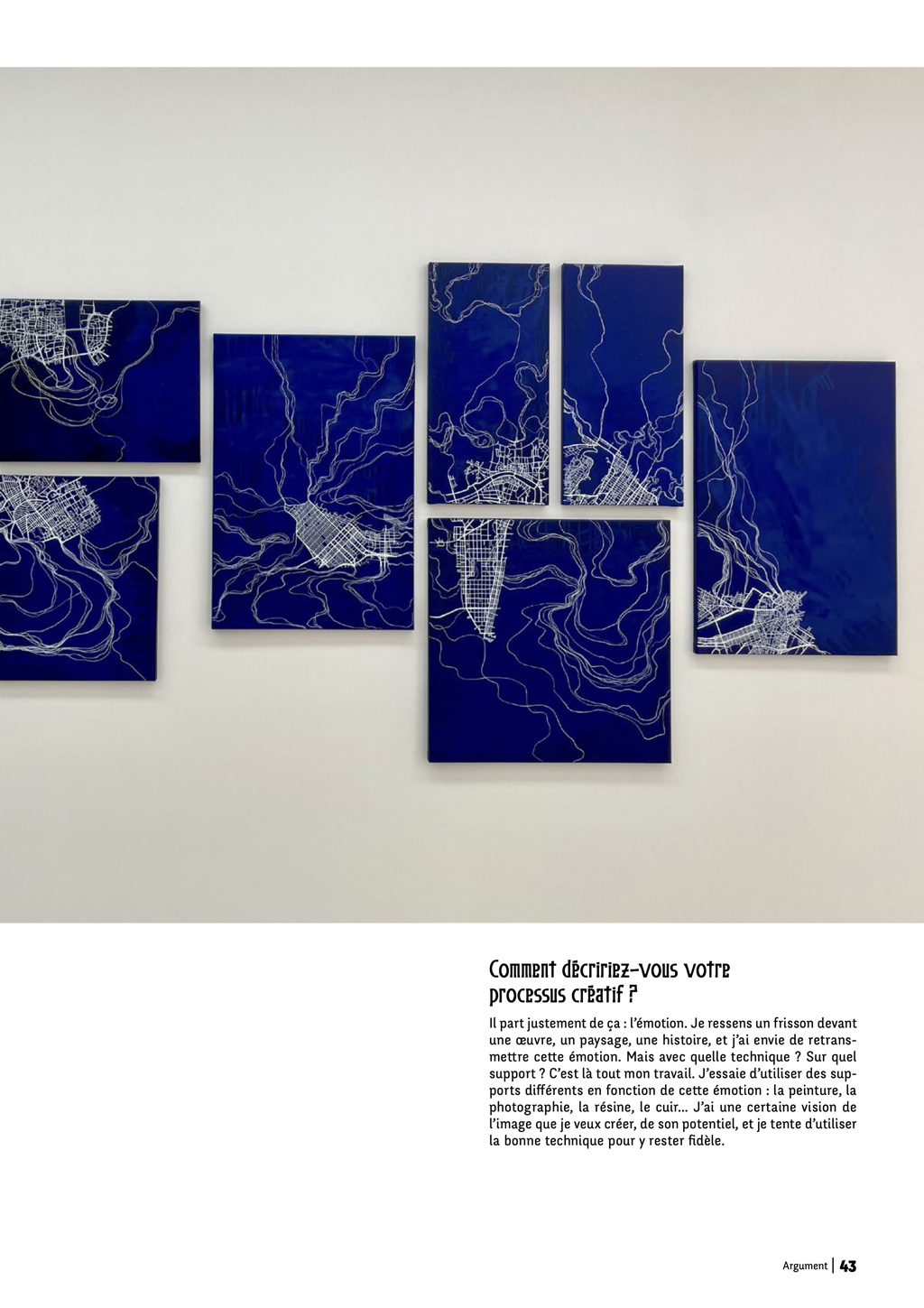
Arriving in Venice teaches you that arrival is never final—and that getting lost is an essential part of the experience. Venice has long served as a "living archives" of global exchange, its "liquid roads" are the city’s arteries, serving as the infrastructure for cultivating the meeting of disparate currents. In this setting, Chen Mei-Tsen invites the viewers to walk across and feel immersed in front of her work In Flux (2025), a monumental work consists of five vertical panels. This turns viewing into an act of navigation where, much like the experience of Venice, orientation is never fixed but is constantly re-made through motion.
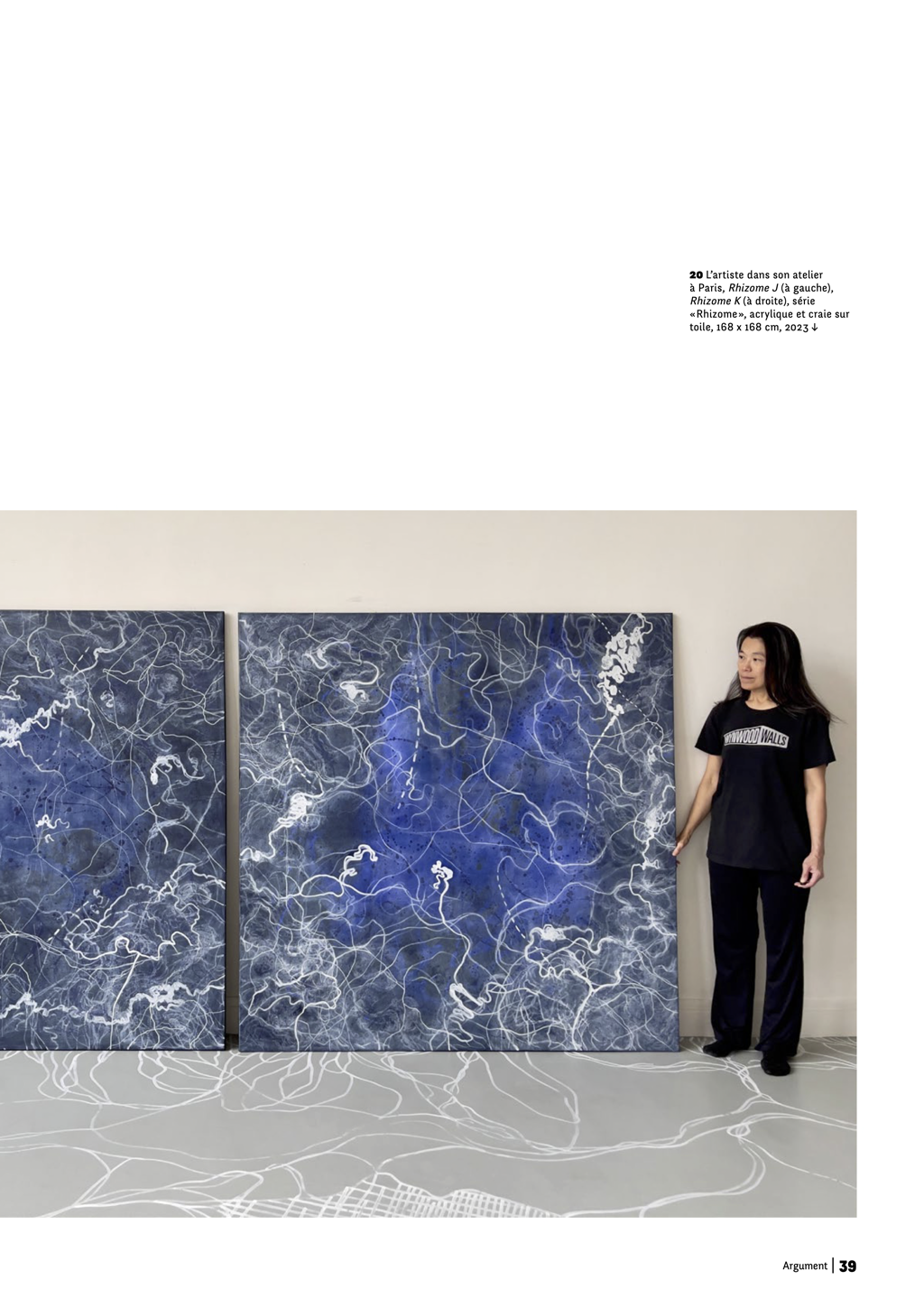
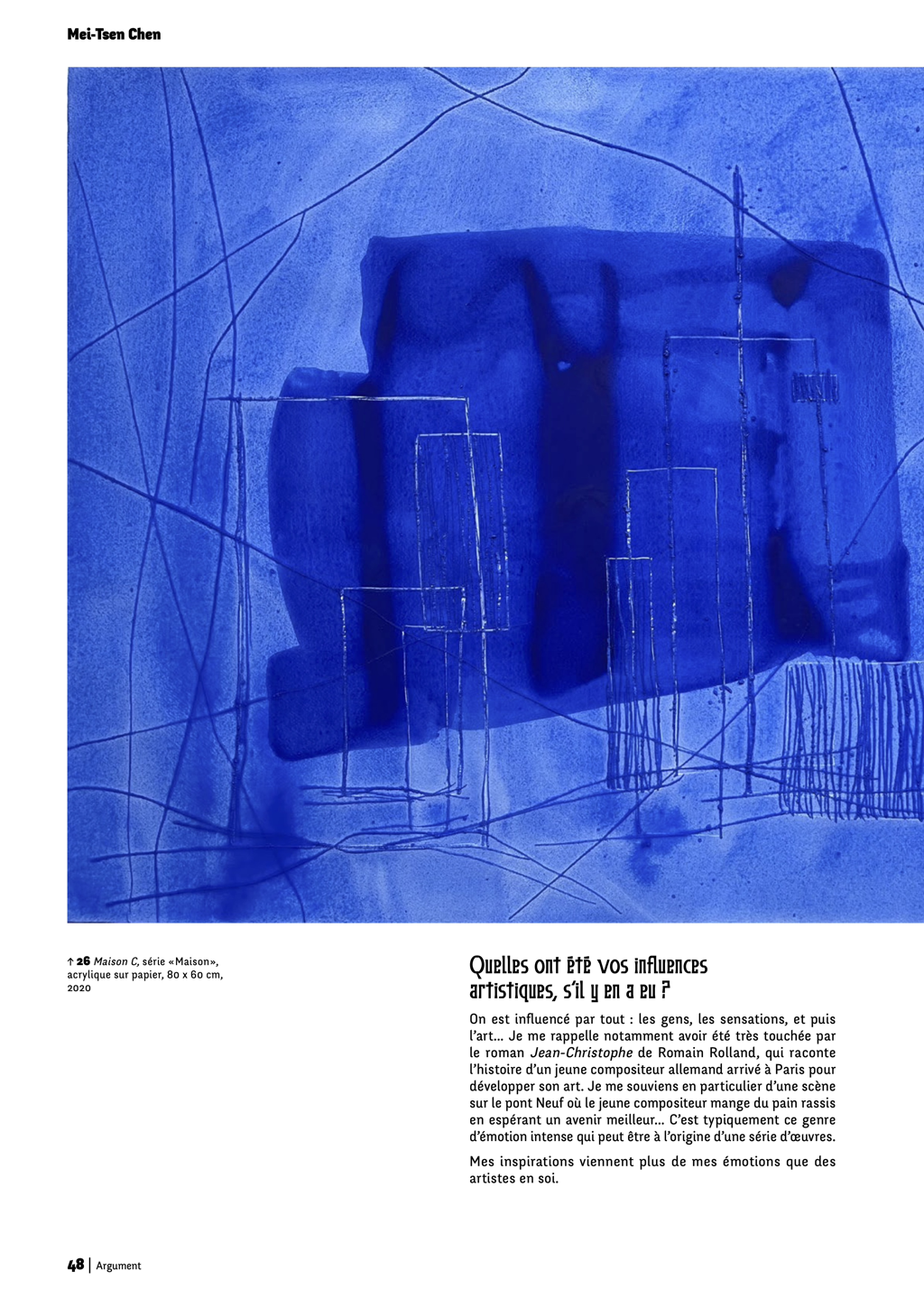
An ultramarine blue backdrop sets a unified tone for countless layers of white traces that oscillate between the macrocosm and the microcosm; from a distance, they resemble a grand aerial view of the ocean, but up close, they become living organisms like jellyfish or nerve cells and vascular tissue. These flowing lines traverse the panels with rhythmic momentum, sometimes gathering into dense clusters and other times wandering as free filaments into the blue void. As light catches the chalk to create an atmosphere of mist or haze, the work gains a time-based depth, continually renegotiating itself through the viewer’s position.
The rhythmic movement of these "breathing" white lines reflects Chen’s personal history as a Taiwanese artist who has lived in Paris for over 30 years. Born in Taipei to an architect father, Chen grew up surrounded by blueprints—a visual language of precision that eventually evolved into her own artistic vocabulary. She bridges the known and unknown, revealing an artist who draws nutrients from diverse cultures while remaining in a state of permanent flux. In Flux reveals Chen’s notion of "constructive nomadism," where moving across geographies is a creative act rather than a rupture, and displacement becomes a space of construction. Her lines—at once architectural and organic—trace the fragile boundaries between permanence and transience. In time, her work suggests not control but surrender: an openness to change where structure and spontaneity coexist in a fine balance, inviting a quiet negotiation between where we come from and where we are becoming.
The painting "In Flux (4-5)" is published on the cover of PLASTIR n°79.
Al-Tiba9 Contemporary Art
February 9, 2026
10 Questions With Mei-Tsen Chen
1. Let’s start with your background. As the daughter of an architect, in what ways has architectural thinking influenced how you build images, spaces, or narratives?
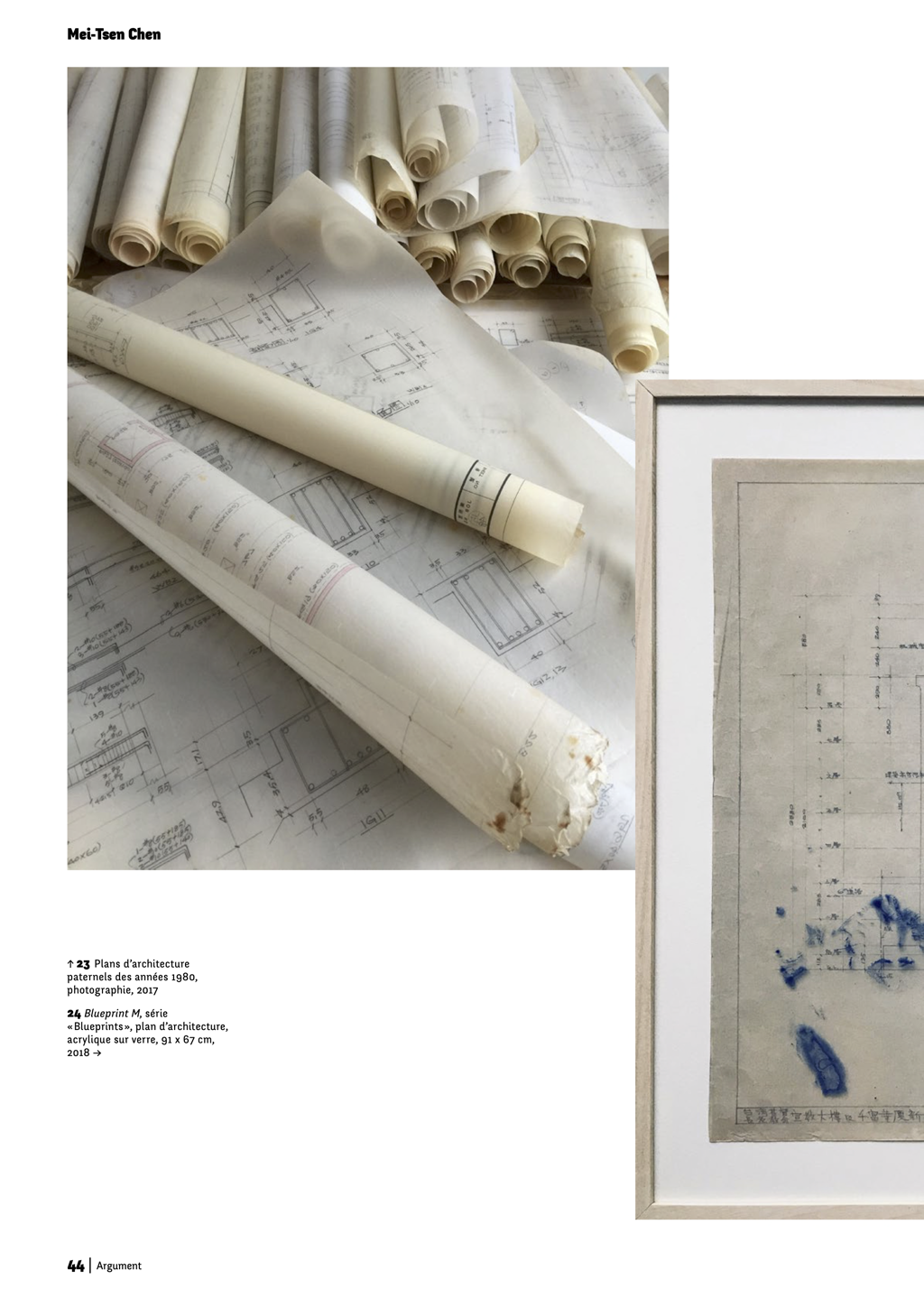
I grew up surrounded by my father’s blueprints and drawing tools. To me, as a child, it was a wonderland full of all kinds of paper, pencils, and measuring tools, such as rulers, compasses, and protractors. There were also paint colors, wallpaper, and tile samples that became my favorite toys. In fact, I tried to understand the designs on these blueprints on my own, while developing my drawings on the backs of the discarded ones. During this time, I have evolved into an active imagination and learned to view things from different angles, considering various perspectives of architectural structure, for example. Through the structural process, I built an intimate topography—a map detailing my sensitivities and experiences as I moved through time and space. In my work, this map becomes a dream that connects and weaves together disparate networks to create a new narrative.
2. You were born in Taipei and have been based in Paris for over 30 years. How has this long-term movement between cultures shaped you both personally and artistically?
Right after graduating from art school over 30 years ago, I arrived in Paris with one suitcase, eager to learn about the local culture and art. How naive I was! Exiled abroad at such a young age, I had to start from scratch—learning the language, becoming independent, and dealing with life's most basic necessities. However, having now lived in France far longer than in Taiwan, I am further developing my long-standing research on "city-identity-movement" by rethinking "home." Rather than viewing home as a fixed spatial unit, I see home as a trajectory generated by the process of leaving and looking back. Through painting and other techniques, I transform personal life experiences into a continuously evolving perceptual map. In this way, "home" becomes a state in formation rather than a completed result. My creative method can be seen as a kind of visual topography that uses depiction, recording, and spatial translation to create a blueprint of life. It's about reexamining life's greatest questions: Who am I? Where did I come from? Where am I going?"
3. You often describe yourself as an “urban nomad.” What does this term mean to you today, and how does it translate into your daily artistic practice?
Well, I actually travel with my artwork whenever possible, to better understand visitors' reactions to my work when it is exhibited in different cities. Through this, I have had many interactions with the public and other artists of all nationalities, responding to social and cultural differences. These travels enable me to establish physical connections between different urban environments. Across the constructive exhibition process, I seek the meaning of life and reflect on my identity as an artist, studying how places shape identity through repeated movement, stays and returns. By shifting the focus from personal memory to geographical and cultural migrations, I explore the world from a wandering approach, transforming the experience of movement into nourishment—a pursuit of identity and a coordinate of existence.
4. You work across many media, including painting, drawing, photography, video, installation, and sculpture. How do you decide which medium is right for a particular idea or project?
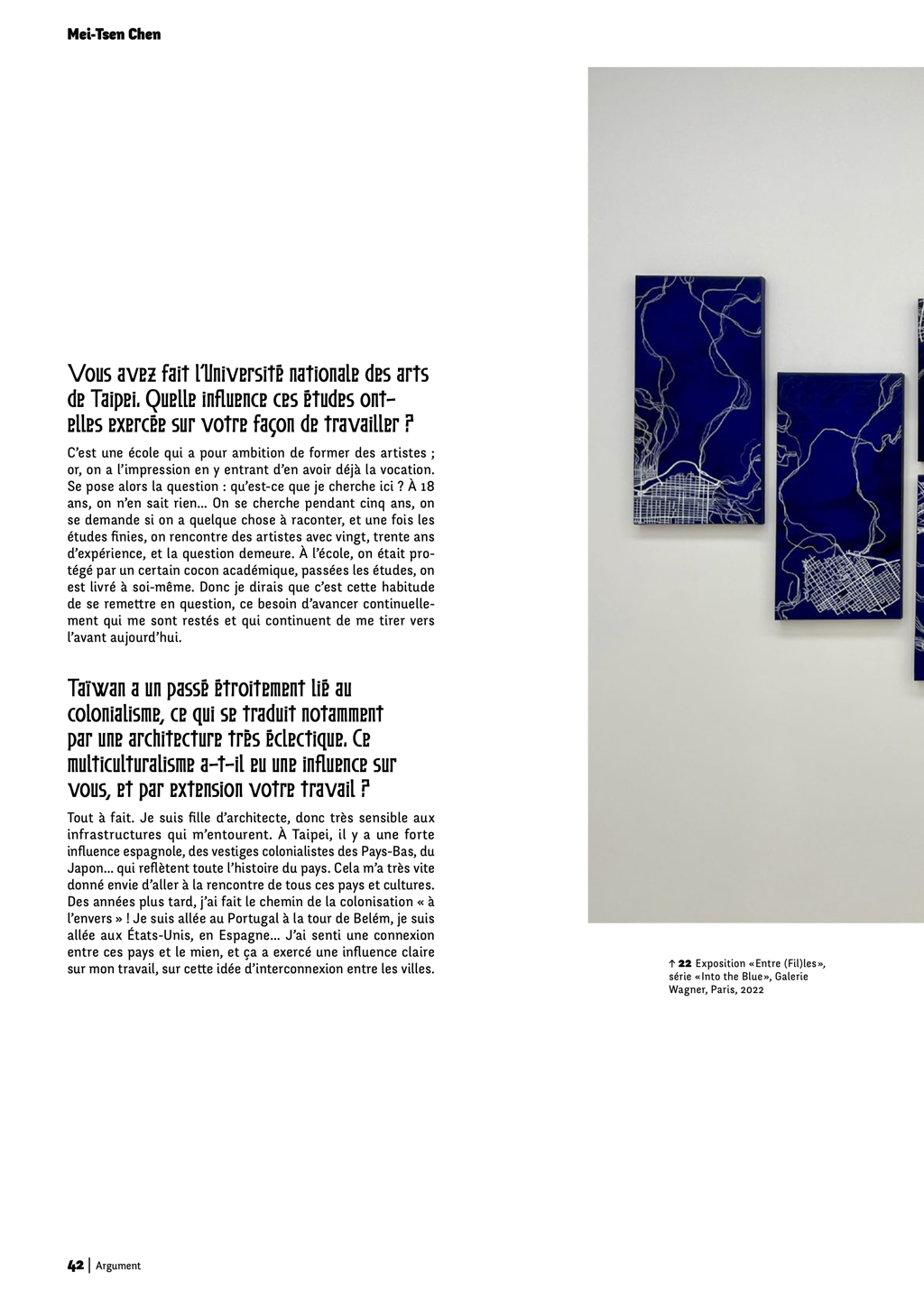
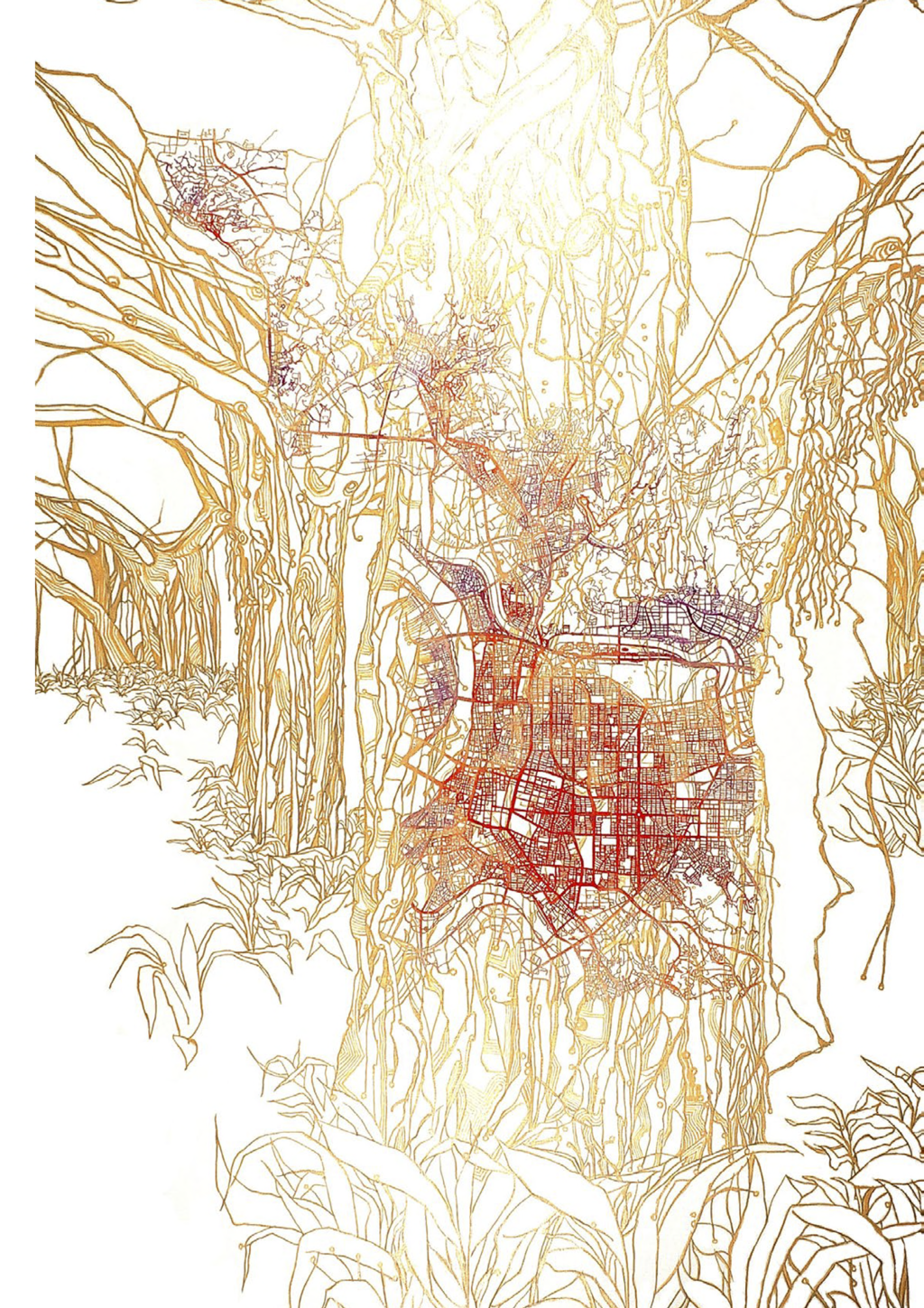
Choosing the appropriate techniques and materials is an essential part of the creative process. While personal preferences are important, I prioritize accurately conveying the concept and theme of the artwork. The stronger the medium's properties, the greater the work's impact. For instance, in the fossil series “Les Plis”, I used resin to achieve a transparent, crystalline effect. For the jellyfish series “Drifting over Time”, I used plastic cloth to capture the translucency of jellyfish and highlight the irony that plastic waste pollutes the ocean yet actually promotes their reproductive ability. After experimenting with various media, I started thinking about which technique would best suit my creative lifestyle. When creating the city map series “Paradise”, I opted for painting. As I meticulously depicted each stroke, I felt as if I had returned to the carefree days of my childhood, doodling freely. I believe this rediscovery of myself, this journey back to the source, represents my optimal creative state!
5. Your paintings are often dominated by shades of blue. What draws you to this colour, and what emotional or conceptual role does it play in your work?
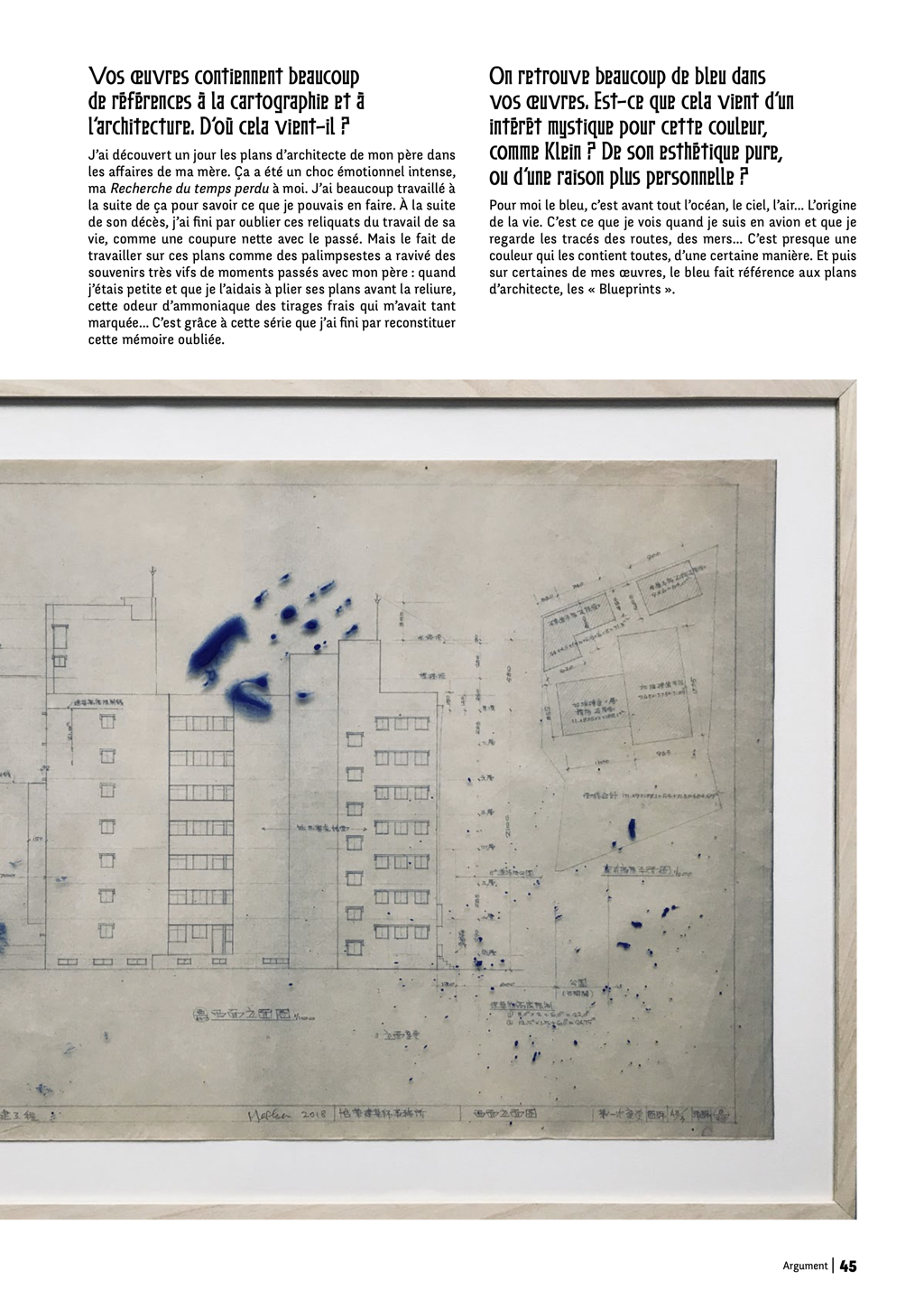
Blue represents the sky, air, water, the ocean, depth, infinity, freedom, and life. It is the most essential color in the universe. In my work, however, blue is a language of self-discovery and reconstruction. I first discovered the mystery, and profundity inclusiveness of "blue" while traveling internationally and looking down from an airplane. At that moment, all the cities, mountains, forests, land, lakes, and oceans merged into one, transforming into various shades of blue and connecting with the sky to form a vast, boundless blue realm. A second powerful impact from blue came from a long-forgotten memory. My father passed away early. One day, among the family belongings preserved by my mother, I discovered his architectural drawings. These blueprints brought back my childhood memories and awakened emotions that had been buried since his passing. Blue has ultimately become one of the most important themes in my work. Moreover, it is deeply linked to my inner awakening, and connected to my life’s blueprint which unfolds in the pursuit of my creative desires.
6. Themes of identity, belonging, displacement, and return recur throughout your practice. Do these themes come from lived experiences, observation, imagination, or a combination of all three?
By definition, an artist is a traveler who leaves "home," discovers the world, and embarks on an exploratory journey. This journey inevitably involves an emotional and reflective process that goes beyond literally entering and leaving one's place of origin. Although Taiwan is of primary importance in my life, I have not truly returned psychologically to the home from which I began my journey. Instead, I find myself in a position that is both accessible and distant. I contemplate the meaning of "home" and embark on a philosophical exploration of the self. Furthermore, long-distance travel and cross-border movement have clearly influenced my thoughts as a traveler. The contradictions, confrontations, and readaptations I experienced with others and in foreign environments while traveling forced me to constantly search for the answer to "What is home?" From self-discovery to self-transcendence, I have redefined my relationship with the world. Therefore, my series of paintings is like a subtle, personal history containing rich reflections on life and experiential perspectives.
7. Your works have been exhibited internationally. How do different cultural contexts influence the way audiences respond to your work?
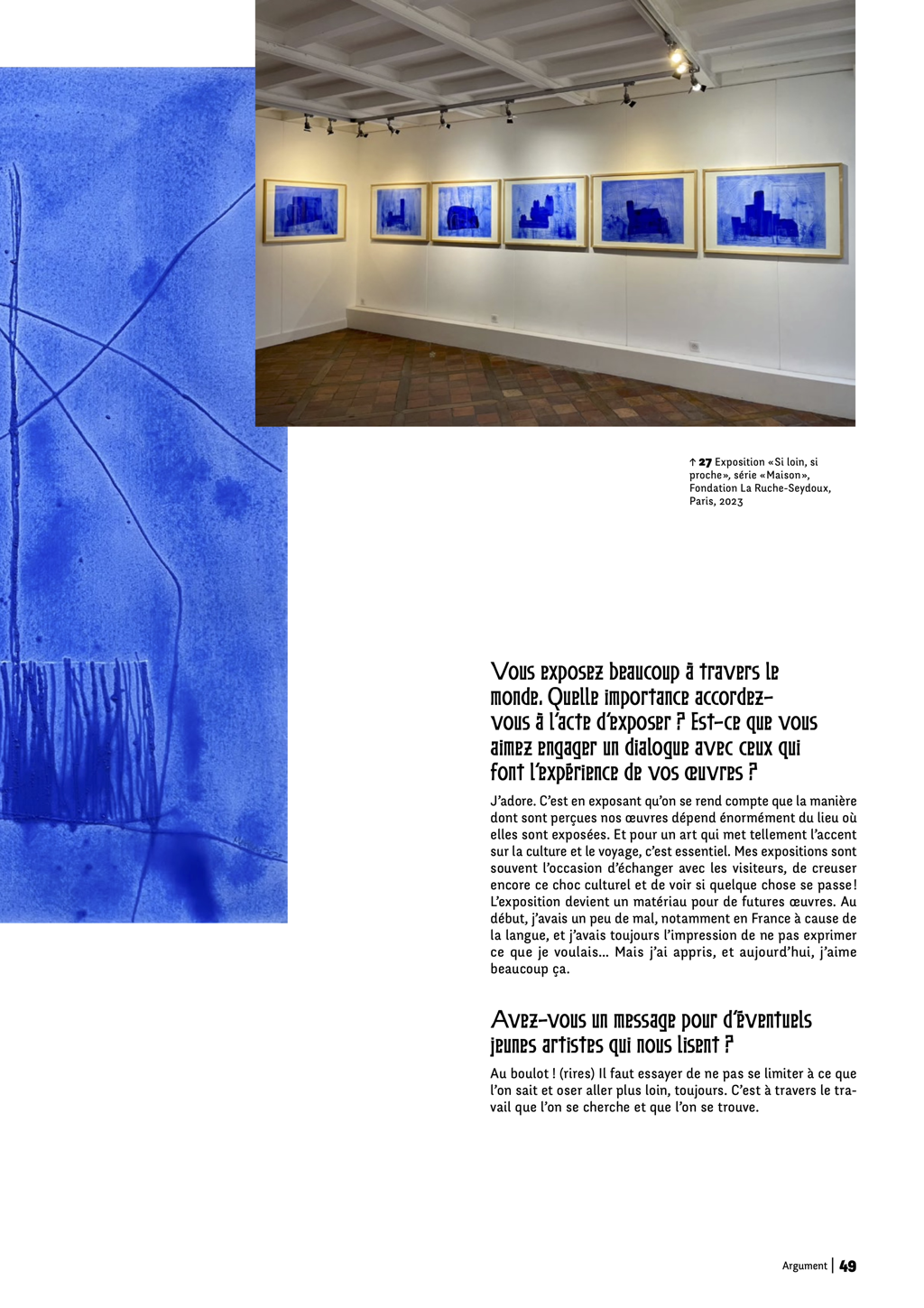
Traveling beyond geographical borders broadens my horizons, takes me further, and deepens my worldview. Every journey is a source of inspiration, and every exhibition nourishes my future creations. Due to their diverse cultures, viewers from different countries may perceive my work differently. Understanding these differences through dialogue and comparing modes of perception is fascinating. In 2024, I took part in the Venice Biennial, organized by the European Cultural Centre, where I exhibited my city map series “Paradise”. On the opening day, there were so many people from different countries. One person from Spain saw my Barcelona and came over immediately to talk to me, saying that it was his city. Others from New York, Stockholm, London and elsewhere also engaged with me, actively exchanging opinions. This is a perfect example of how art can bring people together!
8. In 2024, you received the European Cultural Centre Award at the Personal Structures Biennial in Venice. What did exhibiting in Venice represent for you at this stage of your career?
I am very pleased that my project has been recognized, particularly by such a prominent cultural institution as the European Cultural Centre. This further affirms my commitment to artistic creation over the years. As a Taiwanese islander, I set out to experience other cultures. I traveled through cities and, in doing so, created maps of organic cities, urban forests and networks of crossing cultures. Just as Venice has long served as a place of global exchange where different identities and cultures connect, bringing together our feelings and thoughts. The beauty of going beyond boundaries!
9. Looking back, is there a particular exhibition or city that marked a turning point in your artistic journey?
In fact, many of the cities in which I have exhibited over the years have inspired me. As well as Venice, which I mentioned earlier, I would like to highlight the important cultural melting pot that is New York City. The New Yorkers I met during my exhibitions were curious and enthusiastic, eager to share their opinions and exchange ideas. They were almost like me—global citizens, drifting along with the current of the world like jellyfish!
10. Lastly, what projects or directions are you currently working on, and what would you like the next phase of your practice to explore?
As an artist, I also see art as a means of retracing life's journey, observing the world, and forging my own path. Understanding the origins of creation by going back to the source is my most important task right now. My current creative approach is precisely to recreate an emotional process through time and space. Using the architectural plans of my family home in Taipei from the 1980s as a starting point, I revisited my childhood memories—at home where each on his own, in a gesture of silent sharing, I used the back to elaborate my drawings while my father had used the front. Through this collaborative, four-handed approach, I create works on these blueprints, opening up new possibilities. For me, painting is a way to continue the dialogue with my father, my memories and architecture. It is exactly this emotional and universal language of parent-child inheritance, which resonates within each of us, that I wish to explore.